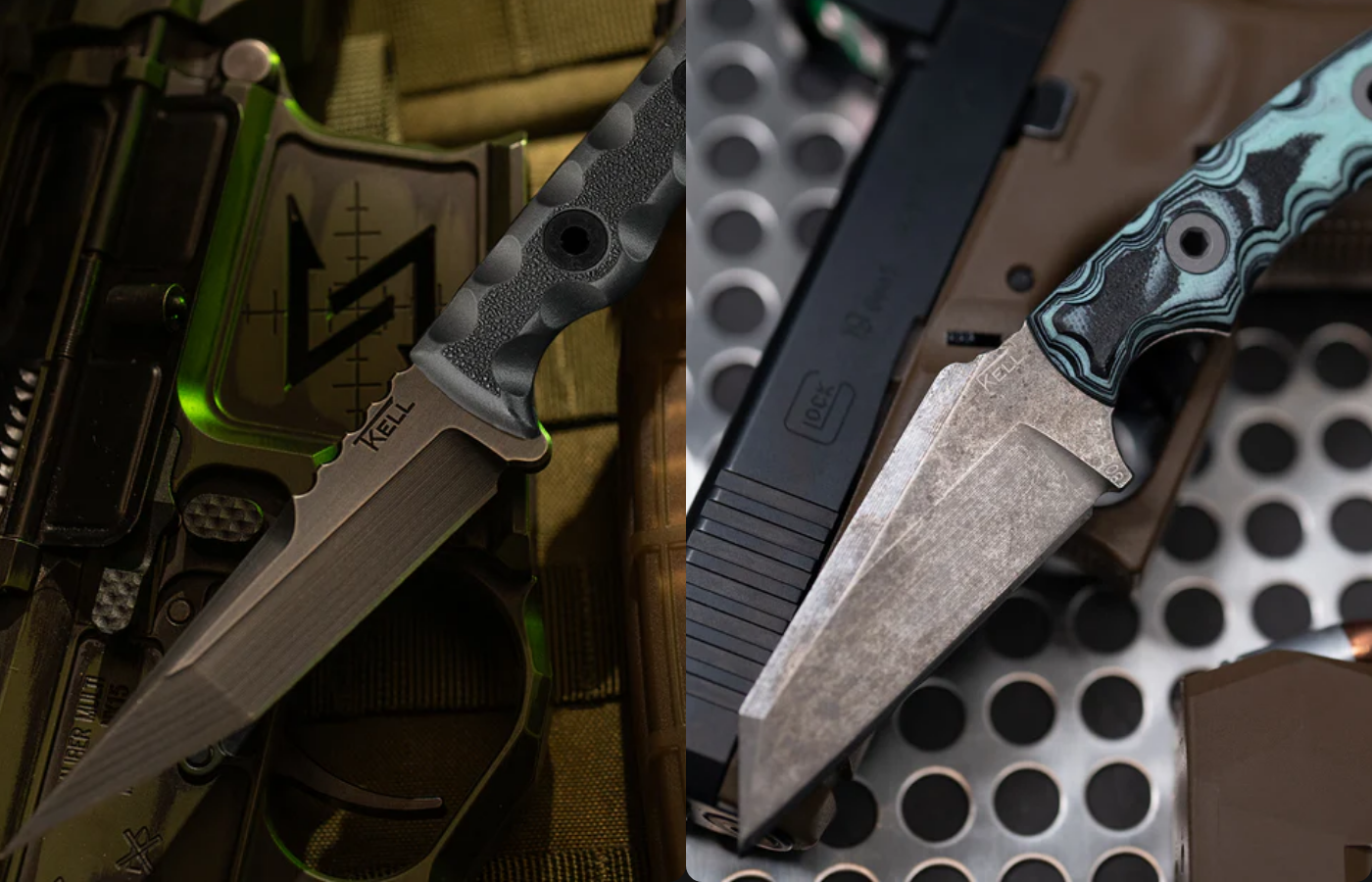


The blade shape you choose can make or break your cutting performance.
At a Glance:
-
Blade shape determines how a knife performs for specific tasks like slicing, piercing, or precision work
-
Sheepsfoot and Wharncliffe blades excel at controlled, straight cuts with minimal tip accidents
-
Clip point blades offer versatility for detail work and piercing
-
Tanto and reverse tanto designs deliver exceptional tip strength for hard-use applications
-
Drop point blades provide all-around utility for everyday carry and outdoor tasks
-
Mako style blades combine fighter geometry with practical cutting ability
Understanding knife blade types helps you select the right tool for the job. This guide breaks down the most popular blade shapes, their strengths, and when to reach for each one.
Why Blade Shape Matters
The geometry of a knife blade directly affects how it cuts, pierces, and handles different materials. A blade designed for precision cuts on rope will perform differently than one built for self defense or processing game. Factors like edge retention, tip strength, and cutting edge length all come down to blade shape.
When choosing a knife, consider:
-
Primary use (everyday carry, tactical, outdoor, utility)
-
Cutting style (slicing, push cuts, draw cuts, piercing)
-
Material you'll cut most often (cardboard, rope, wood, food, leather)
-
Tip strength requirements (light detail work vs. hard-use prying)
Each blade type represents a tradeoff. Some prioritize slicing ability while others favor tip durability. Knowing these differences helps you match a knife to your real-world needs rather than choosing based on looks alone.

Sheepsfoot Blade
The sheepsfoot blade features a straight cutting edge that runs parallel to the handle, with a spine that curves downward to meet it at a rounded or slightly blunted tip. This unique shape originated as a tool for trimming sheep hooves, where an accidental stab could injure the animal.
Best for:
-
Controlled slicing where tip punctures are dangerous
-
Food preparation and kitchen tasks
-
Rescue and emergency cutting (seatbelt cutters, for example)
-
Whittling and detail carving
The straight edge makes sharpening simple and provides excellent control during push cuts. Because the tip sits lower than the spine, you get predictable blade contact without the risk of unintentional piercing. This makes sheepsfoot blades a smart choice for work around people, animals, or delicate materials.
T. Kell's Scout model features a sheepsfoot blade built on the proven Combatant handle platform. The long, straight cutting edge and rounded tip deliver clean cuts on everyday tasks while keeping control front and center.
Wharncliffe Blade
Named after the 19th-century English Lord who designed it, the Wharncliffe blade shares similarities with the sheepsfoot but has a spine that tapers more dramatically toward a finer, more acute tip. The cutting edge remains perfectly straight from heel to tip.
Best for:
-
Precision cuts and scoring
-
Opening packages and boxes
-
Leatherworking and craft applications
-
Detail work requiring scalpel-like accuracy
Because there's no belly curve, Wharncliffe blades track straight through material without wandering. This gives you aggressive cutting power with maximum control. The fine tip also allows for piercing when needed, though it's thinner and requires more care than reinforced designs.
The T. Kell WharnEDC takes this classic blade style and adds an aggressive edge geometry with a reinforced tip. Deep jimping along the spine provides enhanced grip, and the full tang construction delivers balance for everyday or emergency use.
Clip Point Blade
The clip point is one of the most recognizable knife blade types in the world. It features a concave or straight "clip" cut out of the spine near the tip, creating a thinner, sharper point positioned closer to the blade's centerline. This design has roots in early American Bowie knives and remains popular on pocket knives and tactical knives alike.
Best for:
-
Piercing and detail work
-
Skinning and caping game
-
General utility tasks
-
Self defense applications
The clip point blade excels where precise tip control matters. The lowered point allows for intricate cuts and easy penetration, while the belly provides solid slicing performance. Some clip point designs include a sharpened false edge along the clip, adding a secondary cutting surface.
T. Kell's Agent 001 draws inspiration from Loveless double-edge fighters and classic clip point geometry. The blade features two distinct cutting edges: a main edge that bellies gradually to a fine point, and a clipped upper edge that offers clean lines to the tip. The result cuts like a traditional blade while penetrating with authority.

Drop Point Blade
The drop point blade is arguably the most versatile knife blade type available. The spine curves downward (drops) from the handle to the tip, creating a lowered point with a strong, controllable tip and plenty of belly for slicing. This blade shape appears on everything from hunting knives to pocket knives to survival tools.
Best for:
-
General everyday carry
-
Hunting and game processing
-
Outdoor and camping tasks
-
All-around utility work
The drop point's strength lies in its balance. You get a tip that's strong enough for moderate piercing, a belly that slices efficiently, and a blade shape that handles most tasks without specializing too heavily in any single direction. If you could only own one knife blade type, many experts would point you toward a drop point.
T. Kell's Raider features a wide drop point blade that excels at everything from prying open crates to processing game to opening boxes. It's the knife Tim Kell himself carries daily, and for good reason: the deep belly handles all kinds of cutting tasks with ease.
Tanto Blade
The tanto blade takes its name from traditional Japanese short swords. Modern American tanto designs feature a flat grind on the forward section and a distinct angle where the primary edge meets a secondary edge running to the tip. This creates a reinforced point with exceptional strength for piercing hard materials.
Best for:
-
Tactical and self defense applications
-
Piercing tough materials (cardboard, leather, drywall)
-
Prying tasks (though not recommended for most knives)
-
Hard-use cutting where tip breakage is a concern
That sharp angle at the secondary point acts like a chisel, concentrating force for penetration. Tanto blades sacrifice some slicing efficiency compared to curved designs, but they make up for it with tip durability that handles abuse other blade shapes cannot.
T. Kell offers tanto blade options across several models, such as the Nighthawk. The angular geometry pairs well with their tactical knife designs, giving users a reliable tool for demanding environments.
Reverse Tanto Blade
The reverse tanto flips the traditional tanto concept. Instead of the angle appearing on the cutting edge, it shows up on the spine. The result is a blade with a reinforced tip, a slight belly for slicing, and a strong overall profile.
Best for:
-
Heavy-duty utility cutting
-
Tactical applications requiring tip strength
-
Mixed-use scenarios (slicing and piercing)
-
Users who want tanto durability with better slicing performance
Reverse tanto blades address one of the traditional tanto's weaknesses: limited belly for slice cuts. The gentle curve along the edge improves slicing while the angular spine keeps the tip beefy. This makes it a versatile choice for different jobs.
T. Kell's reverse tanto options, including the Nightshade, deliver what forum users call "heavy duty" performance with blades sharpened razor sharp. The geometry carries well horizontally and performs in both defensive and everyday roles.
Mako Style Blade
The Mako blade style combines elements of fighter geometry with practical cutting performance. It typically features a slight curve to the edge, a pointed tip positioned near the centerline, and an overall profile that balances aggression with utility.
Best for:
-
Tactical and defensive carry
-
Fast deployment and fluid handling
-
Users wanting fighter aesthetics with everyday function
-
Rotational balance and blade flow
Mako blades emphasize speed and precision. The geometry flows naturally through cuts, and the pointed tip handles piercing tasks without sacrificing too much slicing ability.
T. Kell's Striker and Nightstalker both feature Mako style blades with fighter influences. The Striker offers perfect rotational balance with an integral thumb rest and deep finger well for ultimate blade control. The Nightstalker adds a finger ring and full-length swedge for increased cutting and piercing capability.

Beyond Shape: What Makes a Quality Blade
Blade shape tells only part of the story. The blade steel you choose affects everything from edge retention to corrosion resistance to how the knife performs over years of hard use.
Key factors to consider:
-
Blade steel composition: High-carbon steel offers excellent sharpness and edge retention but requires more maintenance. Stainless steel provides better corrosion resistance for wet environments or users who prefer low upkeep.
-
Heat treatment: Proper hardening and tempering determine how well a blade holds a sharp edge and resists chipping. T. Kell knives are dual tempered in-house with deep cryogenics for superior performance.
-
Wear resistance: Harder steels resist abrasion better, meaning your blade stays sharp through extended use. This matters for anyone using their knife as a daily utility knife.
-
Coating and finish: Nickel Boron coatings like those on T. Kell blades add another layer of protection against corrosion and wear while reducing friction during cuts.
A well-designed blade shape paired with quality steel creates an essential tool that performs when it matters. The sharp point of a tanto means nothing if the steel behind it chips on first contact. The sharp edge of a Wharncliffe loses value if it dulls after a week of box cutting. When blade geometry and blade steel work together, you get a knife built to last generations.
Choosing Your Blade Type at T. Kell Knives
Selecting the right knife blade type comes down to honest assessment of how you'll actually use it. A collector might prioritize aesthetics, while a daily user needs function first. Consider these questions:
-
What will you cut most often?
-
Do you need tip strength or slicing efficiency?
-
Will you carry it concealed, on your belt, or in a pack?
-
Is this for work, outdoor use, self defense, or all three?
At T. Kell Knives, every blade is handcrafted in the USA by a Marine Corps veteran and backed by a lifetime guarantee. From sheepsfoot to tanto to drop point, each knife blade type in the lineup serves a specific purpose. Explore the full collection and find the blade shape that fits your mission.