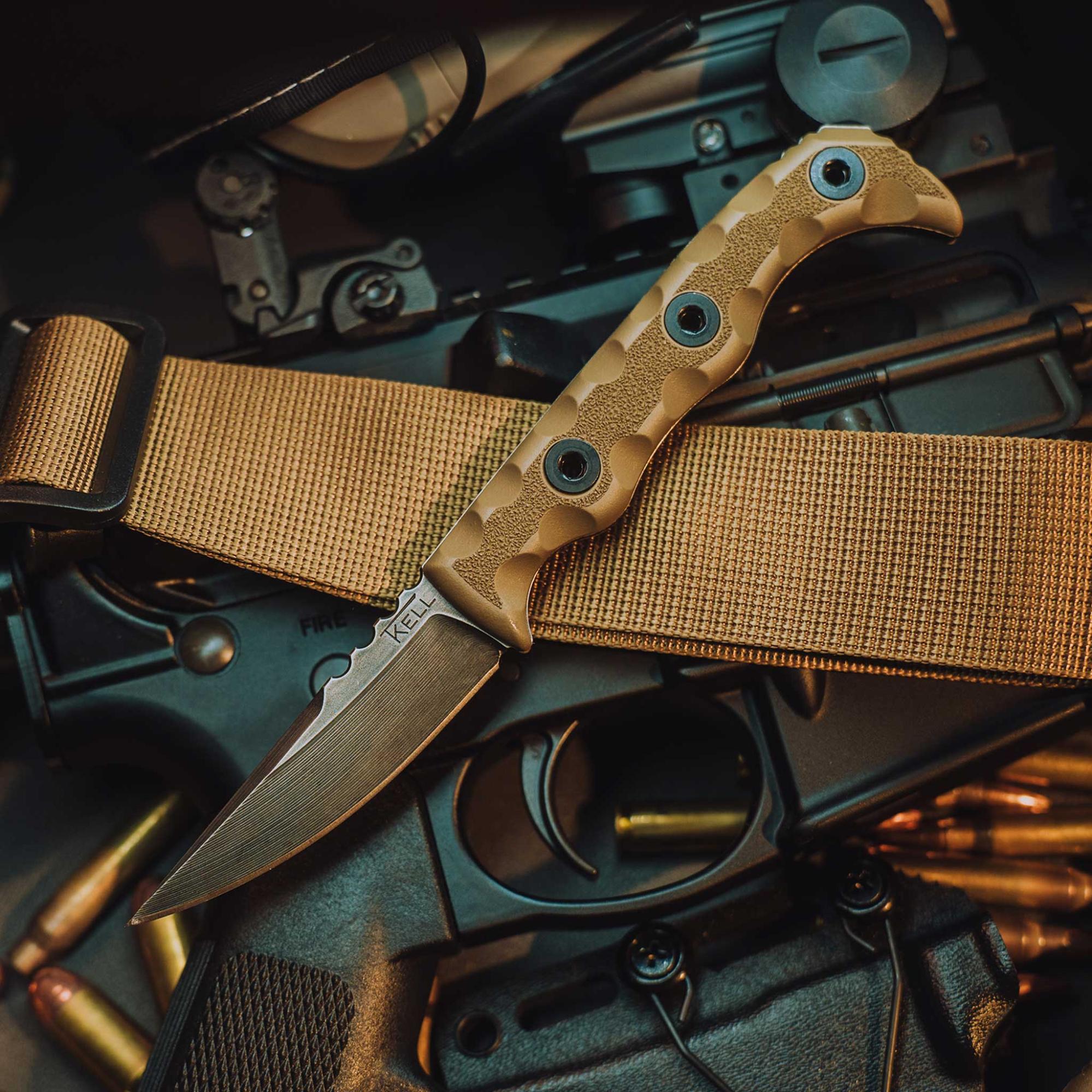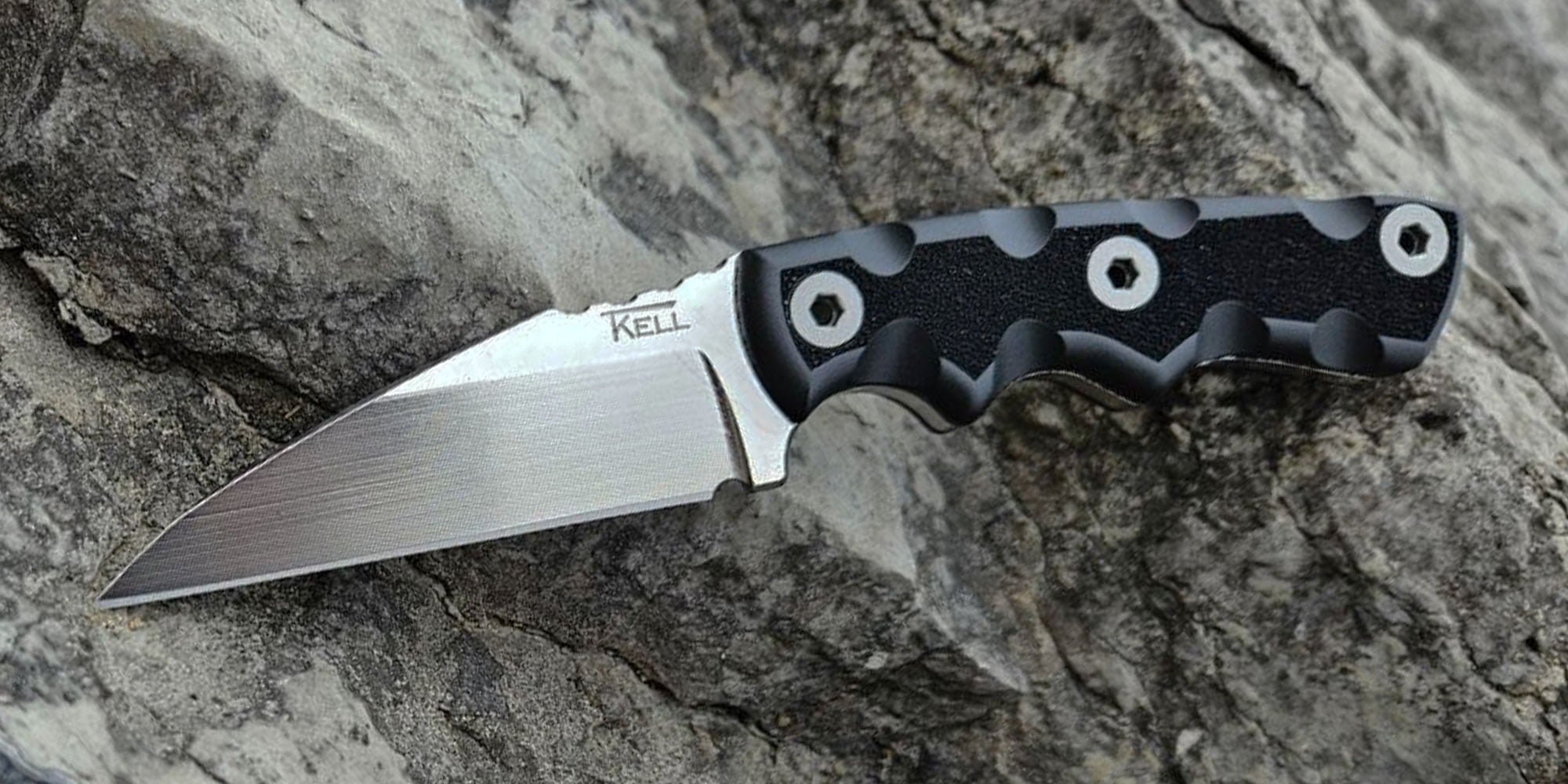

Quick Look at T.Kell's Top Bushcraft Picks
Heading into the backcountry without the right blade turns a weekend trip into a long walk home.
At a Glance:
-
What separates a bushcraft knife from a standard outdoor knife
-
Why fixed blade construction outperforms folders in survival situations
-
A side-by-side comparison of five T.Kell bushcraft-ready blades
-
The features that matter most when picking a wilderness knife
-
Steel and grind tradeoffs for different climates and tasks
T.Kell Knives builds every blade by hand in Ringgold, Georgia under the eye of a USMC veteran. The five knives below cover every bushcraft scenario from feather sticks to game processing.
What Is a Bushcraft Knife?
A bushcraft knife is a fixed blade, full tang knife with a 3 to 5 inch blade designed for wilderness tasks like wood carving, fire prep, shelter building, and food prep. The handle locks securely in the hand, the spine strikes a ferro rod for ignition, and the steel takes a sharp edge that holds up through repeated use.
The word bushcraft itself traces back to the Australian and South African idea of backcountry living skills. Canadian wilderness instructor Mors Kochanski, often called the father of modern bushcraft, framed the discipline as practical wilderness knowledge applied with simple tools. The knife sits at the center of that toolkit.
Traditional designs like the Finnish puukko and the Mora Companion popularized the scandi grind. Newer bushcraft blades often use flat grind, convex grind, or even hollow grind geometry depending on the maker. Each profile has tradeoffs in slicing performance, edge stability, and ease of sharpening in the field.
Why Bushcraft Knives Excel at Survival Tasks
Bushcraft knives excel at survival because full tang construction, fixed blade strength, and a 3 to 5 inch blade length deliver leverage, control, and reliability that a pocket knife cannot match. One blade can baton firewood, throw sparks off a ferro rod, process game animals, and carve trap parts without failure.
Full tang construction handles the lateral stress that snaps lock-up folders during heavy-duty tasks. A 4 inch blade is short enough for fine wood carving yet long enough for batoning kindling. Edge retention from a properly heat-treated stainless steel blade or carbon steel blade means the knife stays useful across multiple days in the field without a stone.
The leather sheath or kydex sheath keeps the cutting edge protected and the carry secure. Pair a thick blade spine with a sharp edge, and one knife stands in for an axe, saw, and skinning tool in a single sheath.
T.Kell Bushcraft Knife Comparison
The table below puts T.Kell's five most bushcraft-ready blades side by side.
| Knife | Blade Length | Blade Steel | Blade Type | Best For |
|---|---|---|---|---|
| Taylors Ridge | 3.5 in | 80CRV or AEB-L | Drop point | All-around bushcraft |
| Warthog | 3.6 in | 80CRV2 or AEB-L | Trailing point | Feather sticks, game |
| Raider | 3.1 in | 80CRV2 | Wide drop point | Versatile field work |
| Scout | 3.1 in | CTS-XHP | Sheepsfoot | Precision carving |
| DP-2 | Compact | NITRO-V | Drop point | Wet environments |
Every knife ships with a kydex sheath, full tang construction, and a fully customizable ergonomic handle.
The 5 Best Bushcraft Knives From T.Kell
1. Taylors Ridge: The Full-Tang Bushcraft Workhorse
The Taylors Ridge is T.Kell's strongest bushcraft pick because it pairs a 3.5 inch deep-belly drop point blade with full tang construction built to cut, chop, slice, pry, and split wood. The 1.5 inch blade height supplies a high flat grind for detailed slicing and a deep belly for power strokes on tough material.
T.Kell offers the Taylors Ridge in two blade steels: 80CRV high carbon steel for edge toughness, and AEB-L stainless steel for corrosion resistance in wet climates. The handle is the EDC grip, which seats the hand near the front finger for balanced control during repetitive bushcraft tasks like batoning or wood carving.
The knife was originally designed for skinning game and quickly became one of T.Kell's most trusted designs for wilderness use. At $225, it sits at a price point well below most American-made custom bushcraft blades. Buyers customize the grip color across 18 patterns including Apache, Hades, Multicam, and ODG Micarta.

2. Warthog: Built for Feather Sticks and Game
The Warthog earns its spot through a deep-bellied trailing tip designed specifically for making feather sticks, processing game, and slicing fish. The 3.6 inch blade with a 0.165 inch spine handles batoning while the curved belly carves long, fine curls for tinder.
The Warthog comes in 80CRV2 high carbon steel or AEB-L stainless steel, dual tempered to 60-62 HRC with deep cryogenic treatment. That heat treatment process pushes edge retention well past industry standard, with cryogenic tempering converting retained austenite into harder martensite for measurable gains in wear resistance. The NiB Recon Distressed coating resists rust on the high carbon variant.
T.Kell built this knife around four bushcraft tasks: cleaning game animals, preparing fish, slicing vegetables, and making feather boards for fire starts. At 5.22 oz, it carries light on a belt yet has enough blade thickness for hard use against seasoned wood.

3. Raider: The Marine Corps-Inspired Field Blade
The Raider is named in honor of the Marine Corps Raiders, the U.S. Marine special forces unit that executes missions across every environment on land and sea. The 3.1 inch wide drop point blade is dual tempered to 60-62 HRC with 0.165 inch blade thickness, making it tough enough to pry, process game, and split kindling without chipping.
The Raider runs on 80CRV2 high carbon steel with a Nickel Boron Battleworn finish that resists rust and abuse. The EDC grip locks the hand against the blade for hours of repetitive carving or batoning without hot spots. It ships with a slim ambidextrous kydex sheath and horizontal belt clip.
Marine Corps veteran designed and tested, the Raider carries T.Kell's Life of the Knife no-questions-asked warranty. The compact 7.25 inch overall length packs easily into a bushcraft kit alongside a ferro rod and small folding saw.

4. Scout: Precision Sheepsfoot for Detail Work
The Scout fills the precision role in a bushcraft kit. Its 3.1 inch sheepsfoot blade features a long, straight cutting edge with a rounded tip that prevents accidental punctures during fine work like notching trap triggers, prepping food, or carving spoon hollows. The Combatant handle platform supplies a secure grip across long carving sessions.
The Scout uses CTS-XHP steel, an American-made high-chromium stainless steel that holds an edge well past most stainless alternatives at the same hardness. T.Kell heat treats this blade to 60-62 HRC with dual tempering and deep cryogenic processing, then finishes it with a NiB Recon Distressed coating for added corrosion resistance.
At 3.75 oz with a 6.7 inch overall length, the Scout carries unobtrusively and complements a larger chopping blade like the Taylors Ridge. The kydex sheath keeps the cutting edge ready on the belt or in a pack. Pricing starts at $275.

5. DP-2: The Stainless All-Rounder
The DP-2 builds on the original DP-1 with NITRO-V stainless steel, a modern nitrogen-enhanced stainless blade steel built for corrosion resistance in humid, salty, or wet conditions. That makes the DP-2 a strong choice for coastal bushcraft, river camping, and rainy-season trips where high carbon steel rusts fast.
Priced at $235 with 18 grip color options, the DP-2 uses the same Battlelock grip platform found across T.Kell's Combatant series. Buyers select micarta or G10 scales depending on grip texture preference. The kydex sheath holds the knife at full retention even when inverted.
NITRO-V sits among the best stainless steels for low-maintenance field use, blending the toughness of nitrogen-alloyed steels with the corrosion resistance of high-chromium stainless. Pair the DP-2 with a ferro rod and a smaller folding pocket knife for a complete weekend kit.

How to Pick the Right Bushcraft Knife
Pick a bushcraft knife by matching blade steel to climate, blade length to task, and grip material to hand size. High carbon steel like 80CRV2 holds a sharper edge longer but rusts faster. Stainless steel like AEB-L or NITRO-V resists rust but needs more frequent sharpening to maintain a fine edge.
A few practical considerations:
-
For dry, cold climates: high carbon steel blade for edge retention
-
For wet, humid, or coastal climates: stainless steel blade for rust resistance
-
For wood carving and fine work: shorter blade length (3 to 3.5 inches)
-
For batoning and heavy-duty tasks: thicker blade (0.16 inches or more)
-
For all-purpose bushcraft: a drop point profile with a deep belly
T.Kell lets you customize grip color and lashing screw color on every available knife, so the same blade can run discreet grayman tones or bright hiviz orange for visibility in heavy cover.

Shop T.Kell for Your Next Bushcraft Knife
Every T.Kell knife is handmade in Ringgold, Georgia by a Marine Corps veteran and a small family team. Each blade is dual tempered, cryogenically treated, and backed by a Life of the Knife warranty. From a Taylors Ridge for the deer woods to a Warthog for feather sticks to a Scout for trap work, T.Kell builds the knife to fit your hand and your mission.
Ready to find your perfect knife? Browse T.Kell's available bushcraft knives and customize one built to outlast you.