
Michigan knife laws let adults own almost any knife and open carry it, and automatic knives have been legal since the state repealed its switchblade ban in 2017. The trouble starts with concealed carry and vehicles, where a dagger or any double-edged nonfolding blade can bring a felony with up to 5 years imprisonment.
Michigan gives law-abiding citizens more room than most people expect. It also has a few traps that catch good people every year. Here's what you need to know before you strap a blade to your belt.
At a Glance
-
Michigan has no statewide limit on blade length.
-
Folders, automatics, gravity knives, and butterfly knives are legal to own and carry.
-
Daggers and double-edged fixed blades can never be concealed or ride in your vehicle.
-
No knife can be carried concealed as a weapon for self-defense.
-
Carrying any knife with unlawful intent is a felony.
-
K-12 schools are weapon-free zones, and Detroit and Lansing add their own rules.
This guide is general information, not legal advice. Laws change, so check current statutes before you carry.
What Michigan Law Actually Says
Three sections of the Michigan Penal Code cover almost every knife question.

Which Knives Are Legal to Own in Michigan?

Under state law, all of them. The American Knife and Tool Institute reports that Michigan bans no knife types. A Marquette County public defender lists daggers, switchblades, and balisongs among the knives that are legal to own. The rules kick in when you carry.
The Switchblade Ban Is Gone
Michigan used to ban spring-opening pocket knives. That law was repealed effective October 11, 2017. A switchblade now follows the same state rules as any other folder.
Open Carry vs. Concealed Carry
Open Carry
Open carry of any knife is legal under Michigan state law as long as you have no unlawful intent, and that includes the blades you can't conceal. Michigan law allows you to openly carry a dagger or other double-edged knife on foot.
A knife counts as open carry when people who casually see you would understand you're carrying a knife:
-
Open carry: A fixed blade in a belt sheath with your shirt tucked in.
-
Concealed carry: The same sheath with an untucked shirt or jacket hanging over it.
Open carry still has limits. These three situations can turn a legal open carry into a charge:
-
Unlawful intent: Under MCL 750.226, going armed with a knife you plan to use unlawfully against someone is a felony, if the knife is open or hidden.
-
Getting in a vehicle: A dagger you carry openly on foot becomes illegal the moment you drive or ride in a car with it.
-
Detroit and Lansing: Both cities ban blades over 3 inches in public places, open or concealed.
Pro Tip. Before you head out, check your cover garment. If your shirt or jacket hides the sheath, Michigan law treats the knife as concealed.
Concealed Carry
MCL 750.227 splits knives into three groups:
-
Always illegal to conceal: Daggers, dirks, stilettos, and any double-edged nonfolding stabbing instrument of any length.
-
Illegal to conceal when carried as a weapon: This is the "other dangerous weapon" clause, and it covers any knife you carry for self-defense.
-
Legal to conceal: A folding knife or a single-edge fixed blade you carry as a tool.
Michigan courts set a low bar for "double-edged." The state Supreme Court once ruled that a throwing knife counted. A sharpened swedge or false edge can put your blade in the double-edged group.
The Hunting Knife Exception
MCL 750.227 carves out one exception to its concealed carry and vehicle rules, for "a hunting knife adapted and carried as such." In plain terms, the knife has to be a real hunting knife, and you have to be carrying it because you're hunting.
Two tests decide if the exception covers you:
-
Is it a hunting knife? Michigan courts have described a hunting knife as a heavy, wide blade with a single cutting edge that curves to a point. A dagger or any double-edged blade doesn't qualify, even if you use it to field dress a deer. A Michigan court ruled on that in People v. Payne.
-
Are you carrying it for hunting? The exception follows your purpose. A hunting knife under your jacket in the woods during season fits. The same knife hidden under your shirt at the grocery store does not.
When both answers are yes, you can conceal the knife and keep it in your truck on the way to the field. If you want to hunt with a double-edged blade, the American Knife and Tool Institute advises that it stay uncovered and never ride in a vehicle, unless you're on land you own or possess.
Knives in Your Vehicle
This is the biggest trap in Michigan knife law. MCL 750.227 bans daggers, dirks, stilettos, and double-edged nonfolding blades in any vehicle you drive or ride in, concealed or not. The only exceptions are your home, your place of business, and land you possess.
Folders and single-edge fixed blades carried as tools are generally fine in a vehicle. If you have to move a restricted blade, that same public defender advises a closed case in the trunk, out of everyone's reach. The statute itself has no trunk exception, so a trunk lowers your risk without guaranteeing anything.
Blade Length and the 3-Inch Rule

Michigan sets no statewide maximum blade length, but the 3-inch number shows up in three places:
-
Unlawful intent: MCL 750.226 names knives over 3 inches, but only applies when you plan to use one unlawfully against someone.
-
Students: The Revised School Code treats a knife over 3 inches or a mechanically opened pocket knife as a dangerous weapon in a pupil's possession.
-
Detroit and Lansing: Both cities limit blades over 3 inches in public.
Weapon-Free School Zones
MCL 750.237a covers the property of public, private, and parochial K-12 schools, plus any vehicle a school uses to transport students:
-
Simple possession of a weapon: A misdemeanor with up to 93 days in jail, 100 hours of community service, and a $2,000 fine.
-
Breaking 750.226 or 750.227 inside the zone: A felony that adds up to 150 hours of community service and fines up to three times the normal amount.
Peace officers and people licensed to carry a concealed weapon are exempt from the simple possession rule.
Local Ordinances in Detroit and Lansing
Michigan has no statewide knife preemption, so cities can pass stricter local laws. A preemption bill that would have protected knife rights statewide was vetoed in 2021. Here are some specific laws in Detroit and Lansing:
-
Detroit and Lansing: Carrying any knife with a blade over 3 inches in a public place is illegal, open or concealed.
-
Detroit: Possessing, selling, or using switchblades, cane swords, or umbrella swords is illegal inside city limits.
Other towns may have local ordinances too. Look them up before you carry your knives somewhere new.
Special Cases
Law Enforcement and Military
MCL 750.231 exempts peace officers from the concealed carry rules in 750.227. Active-duty service members are exempt only while carrying weapons in the line of duty. National Guard and Reserve members are exempt while on duty or drill, or while traveling to and from it. Off duty, you follow the same rules as every other citizen.
Convicted Felons
Michigan's felon-in-possession law, MCL 750.224f, covers firearms and ammunition, not knives. A convicted felon follows the same state knife rules as everyone else. Parole and probation terms can add their own weapon bans.
Carry Legal, Carry Something That Lasts
Michigan gives law-abiding citizens room to carry. Own what you want and open carry freely. Conceal only folders and single-edge blades you carry as tools, never as a weapon. Keep double-edged fixed blades out of your vehicle, stay clear of school zones, and respect the 3-inch limit in Detroit and Lansing.
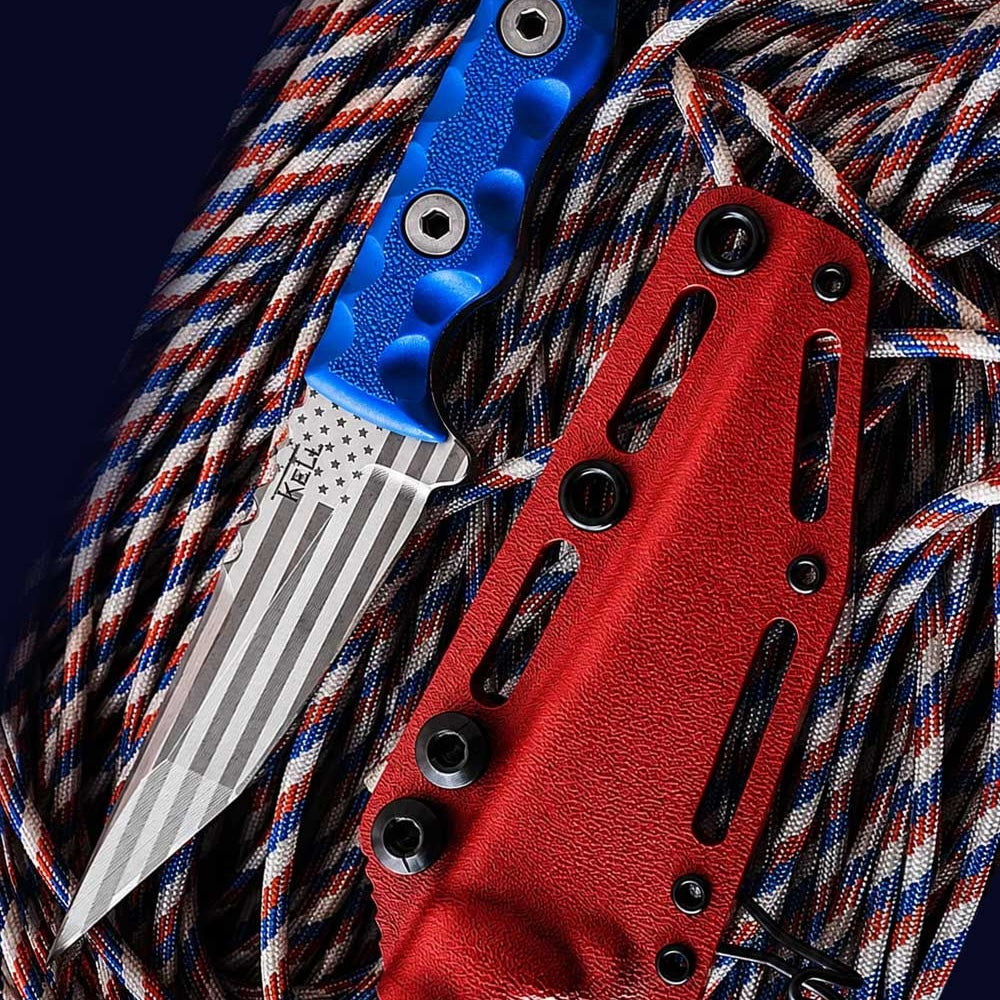
T.Kell Knives is founded and run by a USMC veteran and builds every blade by hand in Ringgold, Georgia.
-
Browse fixed blade and EDC knives and small knives built for hard use.
-
Carry openly in a T.Kell sheath shaped for your blade, with belt clips for your setup.
-
Every knife is backed by the Life Of The Knife warranty and lifetime sharpening.
Know the law, check the grind, and shop T.Kell Knives today.
Frequently Asked Questions
Is it legal to carry a fixed blade knife in Michigan?
Yes, openly. You can also conceal a single-edge fixed blade you carry as a tool, per a Michigan public defender. Double-edged fixed blades can never be concealed or kept in a vehicle.
Are switchblades legal in Michigan?
Yes. Michigan repealed its switchblade ban in 2017. Detroit still bans them inside city limits.
What is the maximum blade length in Michigan?
There is no statewide limit. Detroit and Lansing ban carrying blades over 3 inches in public, and the school code treats knives over 3 inches as dangerous weapons for students.
Can I carry a knife for self-defense in Michigan?
Openly, yes, as long as you have no unlawful intent. Concealing any knife for self-defense makes it a "dangerous weapon" under MCL 750.227, which is a felony.