
Every knife wears out eventually. The trouble is that a worn knife is still a sharp object, and it can cut the person grabbing the trash bag or sorting recycling by hand. This guide covers how to tell when it’s time to retire a knife, how to package it for safe disposal, and where to take it.
At a Glance:
-
If the knife still cuts, sharpening or donating beats the landfill.
-
Wrap the blade before you do anything else. It should never travel through your house or your trash uncovered.
-
Scrap metal recycling is the best disposal method for most knives.
-
Curbside recycling bins do not take knives. Loose blades injure workers and jam sorting equipment.
-
A wrapped, boxed, labeled knife is allowed in general waste in most towns.
Is the Knife Actually Finished?
Most old knives that get thrown away are not worn out. They are dull. That is a sharpening problem, and it is worth knowing how often a knife really needs sharpening before you write off a blade with years left in it.
| Condition | What to Do |
|---|---|
| Dull blade, handle solid | Sharpen it. Nothing is wrong with the steel. |
| Chipped or rolled edge | Sharpen it out, or send it to a pro. |
| Loose or cracked scales | Re-handle it. On a good knife, this is a cheap fix. |
| Surface rust | Clean and oil it. It is not a death sentence. |
| Snapped tip, cracked tang, deep pitting | Dispose of it. |
| Works fine, you just do not use it | Donate or sell it. |
How to Wrap a Knife for Disposal

Do this before the knife leaves your possession. Each blade takes about two minutes.
-
Clean and dry it: Wash off the knife so it is clean, then dry the blade with a paper towel. A dirty blade in the bin can attract pests.
-
Cover the sharp edge: Fold a piece of cardboard over the edge so it covers both sides, then run tape around it several times. Use duct tape or packing tape, since masking tape will not hold.
-
Add layers: Wrap the blade in layers of newspaper or bubble wrap and tape that down. Wrap every individual knife on its own, even from the same knife set.
-
Contain it: Put the wrapped knife in a small cardboard box or a rigid plastic container. A rinsed milk jug with the lid taped shut works for shorter blades.
-
Label it: Write "SHARP" on the outside of the container in permanent marker. Rhode Island Resource Recovery gives this exact instruction for sharp metal objects: box it, tape it shut, and label it "SHARP."
Do not drop sharp blades into a plastic bag on their own. A bag does nothing against a sharp edge and gives the person handling the waste no warning.
Where to Take Old Knives

Scrap Metal Recycling
This is the cleanest ending for a blade. Stainless steel and carbon steel are worth money as scrap metal, and recycling keeps them out of the landfill. Call the yard first and ask if they take blades and how they want them packaged. Some want wood or plastic handles removed, since scrap is priced on metal content.
Transfer Stations and Drop-Off Centers
If there is no scrap yard nearby, your county transfer station or recycling center may run a scrap metal container that takes sharp items. These sites accept material that curbside bins cannot, so a wrapped blade with nowhere else to go often belongs here. Call ahead or check the facility's website since not every station takes sharps, and hours can vary by location.
Household Waste
If neither option exists near you, the trash is a legitimate answer. A wrapped, boxed, labeled knife is accepted in general waste in most towns. Set the wrapped knife inside the trash bag instead of dropping it in loose. This way it cannot punch through the plastic and create a safety hazard.
Donation and a Second Life
If the blade still cuts and the handle is sound, someone can use it. A thrift store or a charitable organization may give it a second life. Call first, because plenty of shops refuse knives. If donating, wrap it the same way.
Knife Bins and Police Stations
A knife bin, also called a knife surrender bin, is a locked drop box where anyone can leave a blade to be destroyed anonymously. These are widespread in the UK. The United States has no national equivalent. Some police stations hold occasional surrender events, but most do not take walk-in drop-offs. Call the non-emergency line first to ask if they have a surrender bin or a scheduled surrender event.
| Disposal Method | Best For | What to Know |
|---|---|---|
| Scrap metal recycler | Metal knives of any size | Blades are melted down and recovered as metal. |
| Transfer station or recycling center | No scrap yard nearby | Many run a scrap metal container on-site. |
| Household waste | Broken or badly rusted blades | Allowed in most towns once wrapped and labeled. |
| Thrift store or charitable organization | Knives that still cut | Call ahead. Many will not take blades. |
| Knife bin | Anyone who wants a blade destroyed | Widespread in the UK, uncommon in the US. |
What Not to Do
A few bad habits can turn a simple disposal job into a safety hazard for someone else. Here is what not to do when disposing of a knife:
-
Do not put knives in your curbside recycling bin. For metal, those programs take cans, lids, and foil. Sharp objects injure the people sorting by hand.
-
Do not toss a bare blade in the trash bag. It will cut through, and it will cut somebody.
-
Do not hand off a broken knife. A snapped tip or cracked tang is a safety hazard for the next owner, not a gift.
Special Cases Worth Knowing
Not every blade fits within the general rules above. Here's how to handle some of the exceptions:
-
Ceramic blades: Ceramic is not metal, so scrap yards will not take it. Wrap the pieces heavily and use general waste.
-
Serrated blades: Serrations hold an edge for years, and the teeth tend to snag packaging. Make sure to double the tape.
-
Old blades with heavy rust: Pitting that has eaten into the edge cannot be sharpened out. Recycle the steel.
-
A full knife set: Wrap each knife on its own before boxing them together, then mark the box.
-
Inherited knives: A well-made blade can usually be restored. Ask a sharpener first.
Carry a Knife You Never Have to Throw Out

Knife disposal comes down to three moves: deciding if the blade is truly done, wrapping it so the next set of hands stays intact, and routing it to scrap metal recycling when you can. The whole job takes about ten minutes.
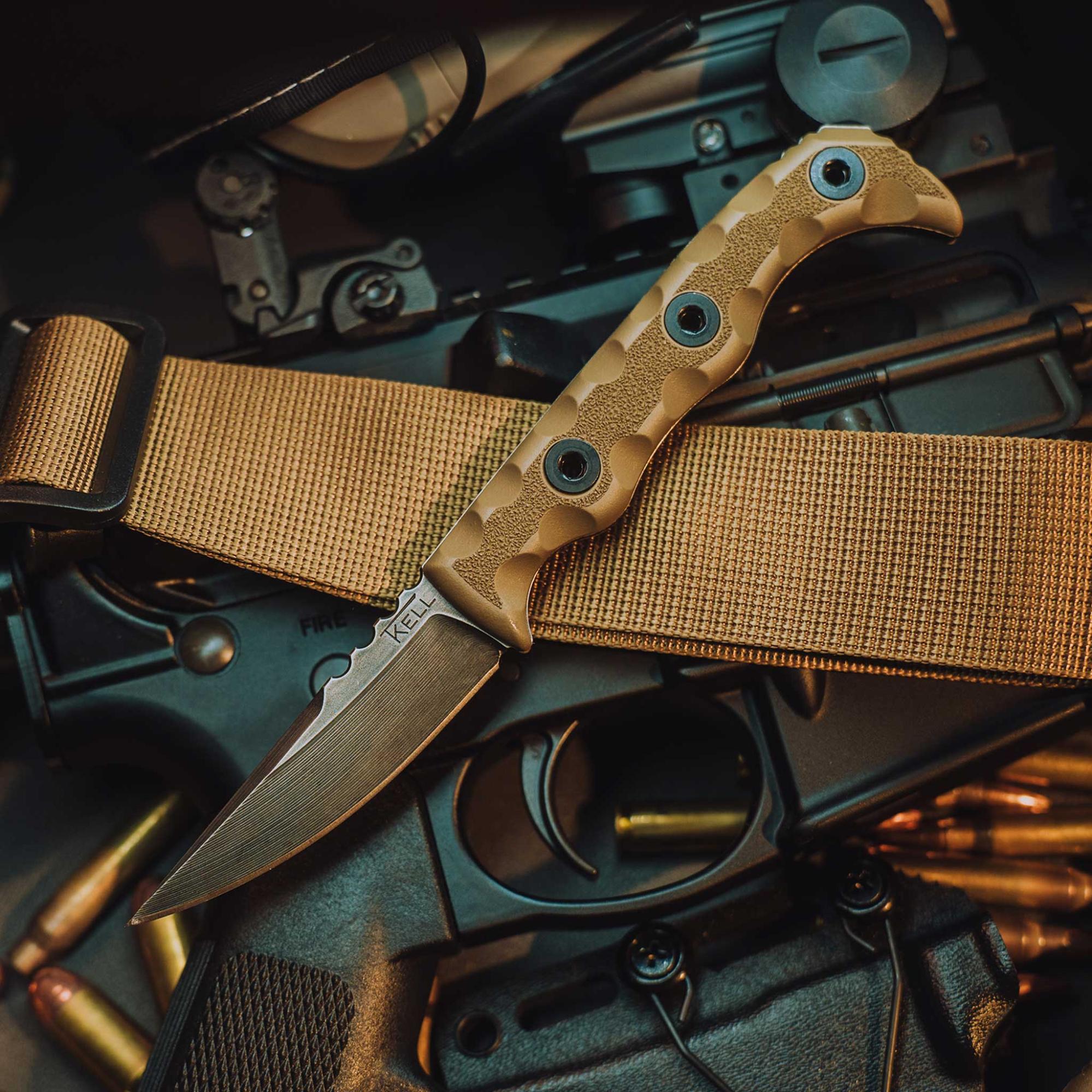
The better fix is owning a knife you never have to dispose of. T.Kell Knives builds handcrafted fixed blades and folders in Ringgold, Georgia, run by a Marine Corps veteran and his family. Every knife carries the Life Of The Knife warranty: T.Kell will repair, replace, or rebuild it no matter what happened, and they sharpen it for life at no charge.
-
Match one with a Kydex or leather sheath and the grip that fits your hand.
-
Need an edge restored? Contact the shop and send it in.
Stop replacing knives. Buy one built to outlast you.
Frequently Asked Questions
Can you put knives in the recycling bin?
No. Curbside programs take cans, lids, and foil, and loose blades are a hazard to workers sorting by hand. Metal knives still get recycled, but they have to go straight to a scrap metal recycler or a drop-off site that takes sharp items.
Can you throw knives in the trash?
Yes, in most places, once packaged. Wrap the sharp edge in cardboard and tape, add layers of newspaper or bubble wrap, seal it in a box or plastic container, and label it "SHARP." A few cities set their own requirements, so check locally.
How do you dispose of a knife safely?
Clean and dry it, fold a piece of cardboard over the edge and tape it, wrap the blade, box it, and mark the outside. Take it to a scrap metal recycler if one is close, or use your household waste.
Will a thrift store take used knives?
Sometimes. Some accept clean, undamaged knives, and some refuse blades outright. Call before you drive over, and never donate a knife with a cracked handle or broken tip.
What is a knife bin?
A knife bin, or knife surrender bin, is a secured drop box where anyone can leave an unwanted blade anonymously to be destroyed. They are common across the UK, though the US has no equivalent program.
Is it worth sharpening instead of replacing?
Usually. Most knives people throw out are only dull, and the steel is fine. If the handle is solid and the blade is straight, sharpening gets a working knife back for less than a new knife costs.